Plan A · Repair
The plan to end aging.
Aging is the common risk multiplier behind most chronic disease. Repair it at the system level and most of the diseases downstream lose their biggest driver. This is Omri Amirav-Drory’s plan, in the order he gives it.
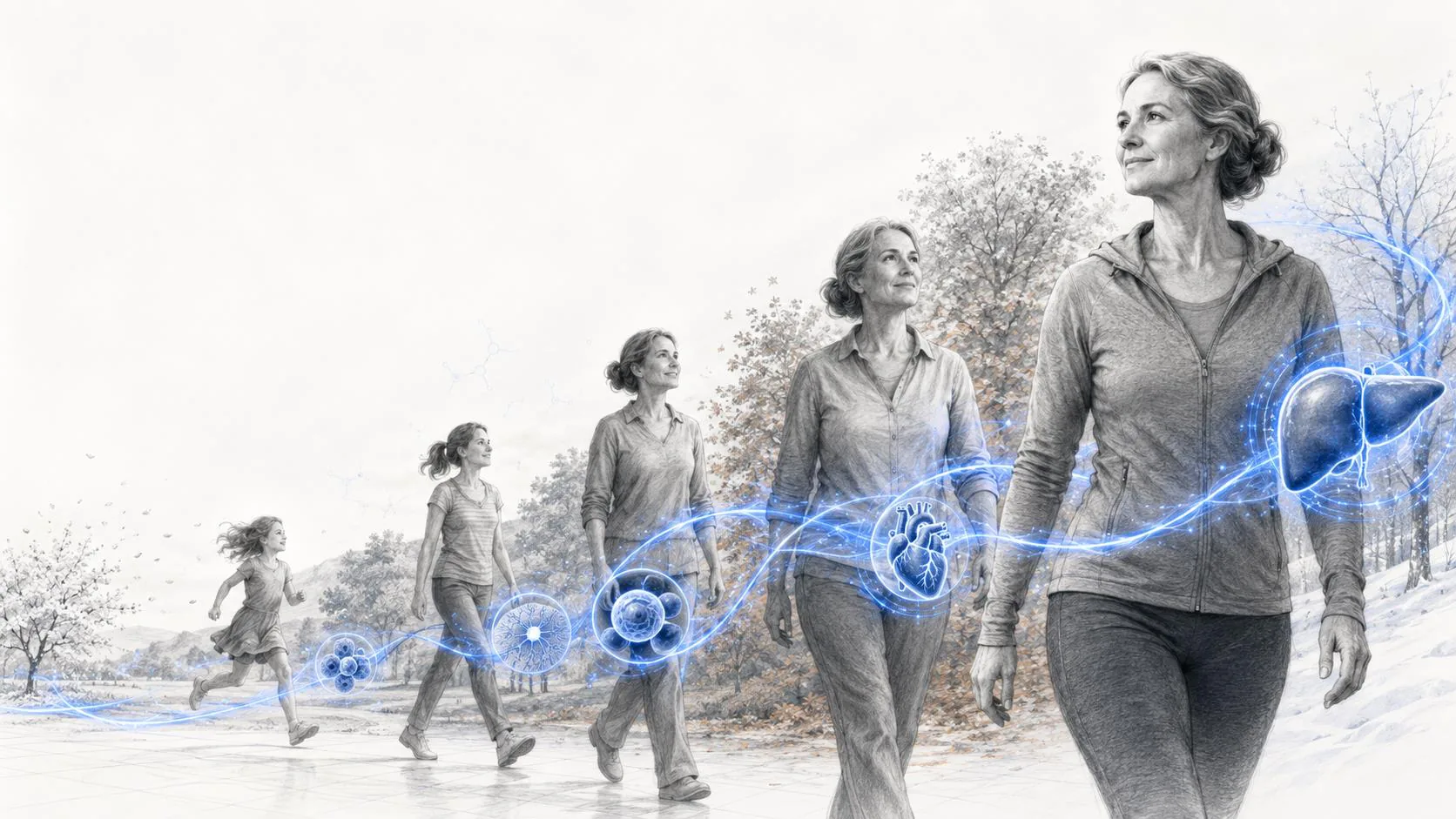
01 Why aging is the target
One root cause. Many diseases.
Heart disease, cancer, stroke, dementia, diabetes and organ failure look separate, but age raises the risk of nearly all of them.
One biology→Many diseases→One lever
9 of the 10 leading causes of death are due to aging.
- 01Heart disease
- 02Cancer
- 03Accidentsnot aging
- 04Cerebrovascular disease
- 05Chronic lower respiratory disease
- 06Alzheimer’s
- 07Diabetes
- 08Kidney disease
- 09Liver disease
- 10COVID-19
Treat aging upstream, not each disease downstream.
The curve everyone is on.
Chance of death per year. Source: @statto, as shown in the deck. Hover a point or pick an age.
Human vs. mole rat.
The mole rat’s risk of dying barely changes with age. Ours climbs. Same basic biology, different control.
Negligible senescence
Some animals barely age. The naked mole rat is one of them.
Its chance of dying in a given year stays about the same from youth to old age. For humans that chance climbs steeply after 65. The point of the comparison is that a flat curve is biologically possible. The question is what controls it.
02 The race to 160
Two doublings mostly prevented early death. The third requires repair.
20 → 40 → 80 is life expectancy at birth, not maximum lifespan. The verified record is 122. Getting the next doubling means fixing damage, not only avoiding it.
- ~20 Hunter-gatherer world Survive infection, injury and childbirth
- ~40 Industrial revolution Sanitation · nutrition · safer birth
- ~80 Modern life Vaccines · antibiotics · chronic care
- 160+ The 3Rs Reprogram · Replace · Regenerate
Verified record
122
The longest confirmed human life. Life expectancy at birth has doubled twice. The maximum has barely moved.
Beyond 160
Repair improves faster than new damage.
Longevity escape velocity. The deck labels this a hypothesis, and so do we.
The destination
160 is not the destination. It is where aging becomes maintainable.
03 The ABCD plan to end aging
Only Plan A is designed to outrun aging.
Plan D accepts death. Plan C waits. Plan B fights failures one by one. Plan A repairs the system.
Repair is the path to longevity escape velocity.
04 Plan A
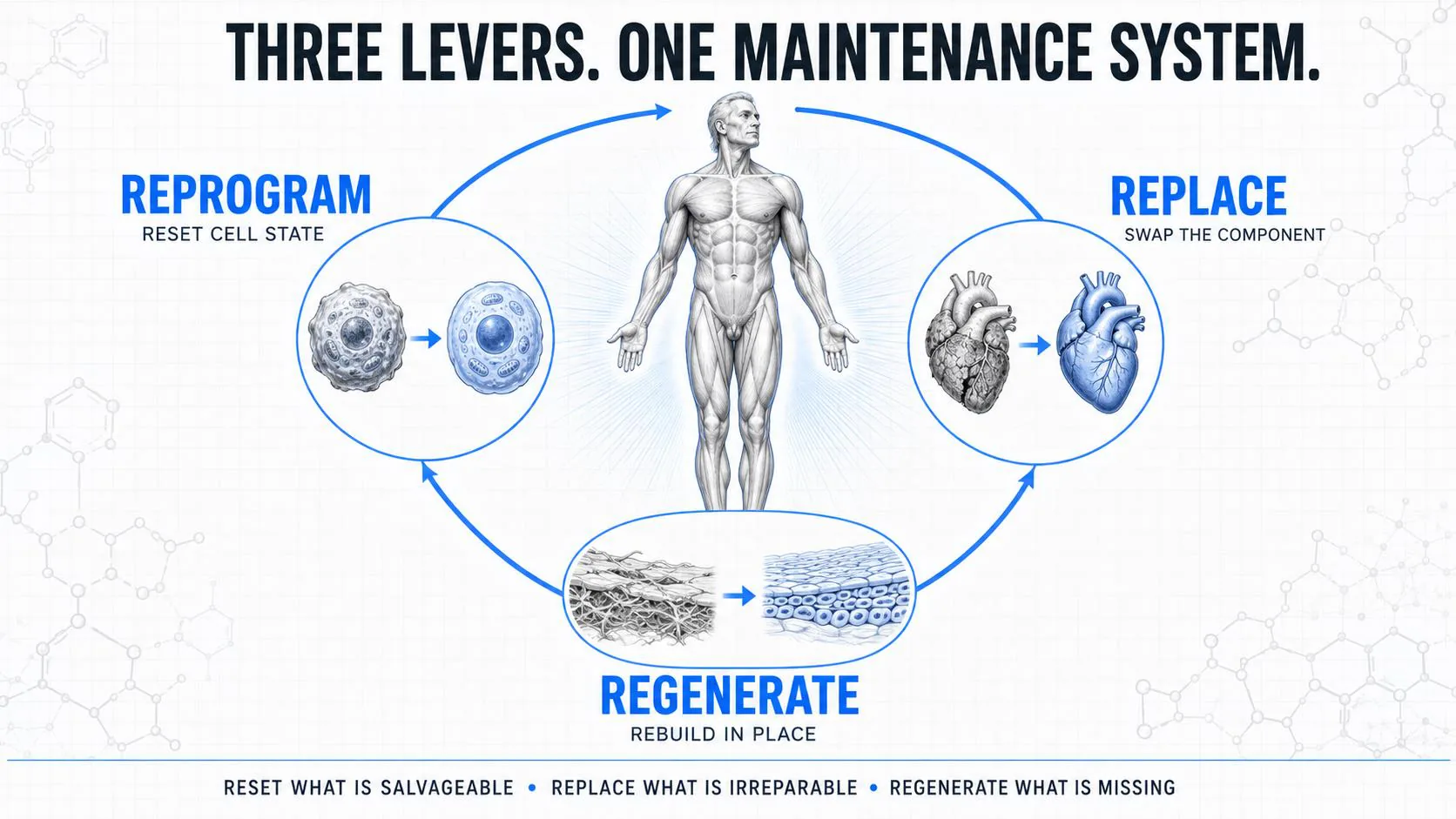
Three levers. One maintenance system.
Reset what is salvageable. Replace what is irreparable. Regenerate what is missing. Pick a lever to see what it means, then read the three chapters that follow.
05 Lever one · Reprogram
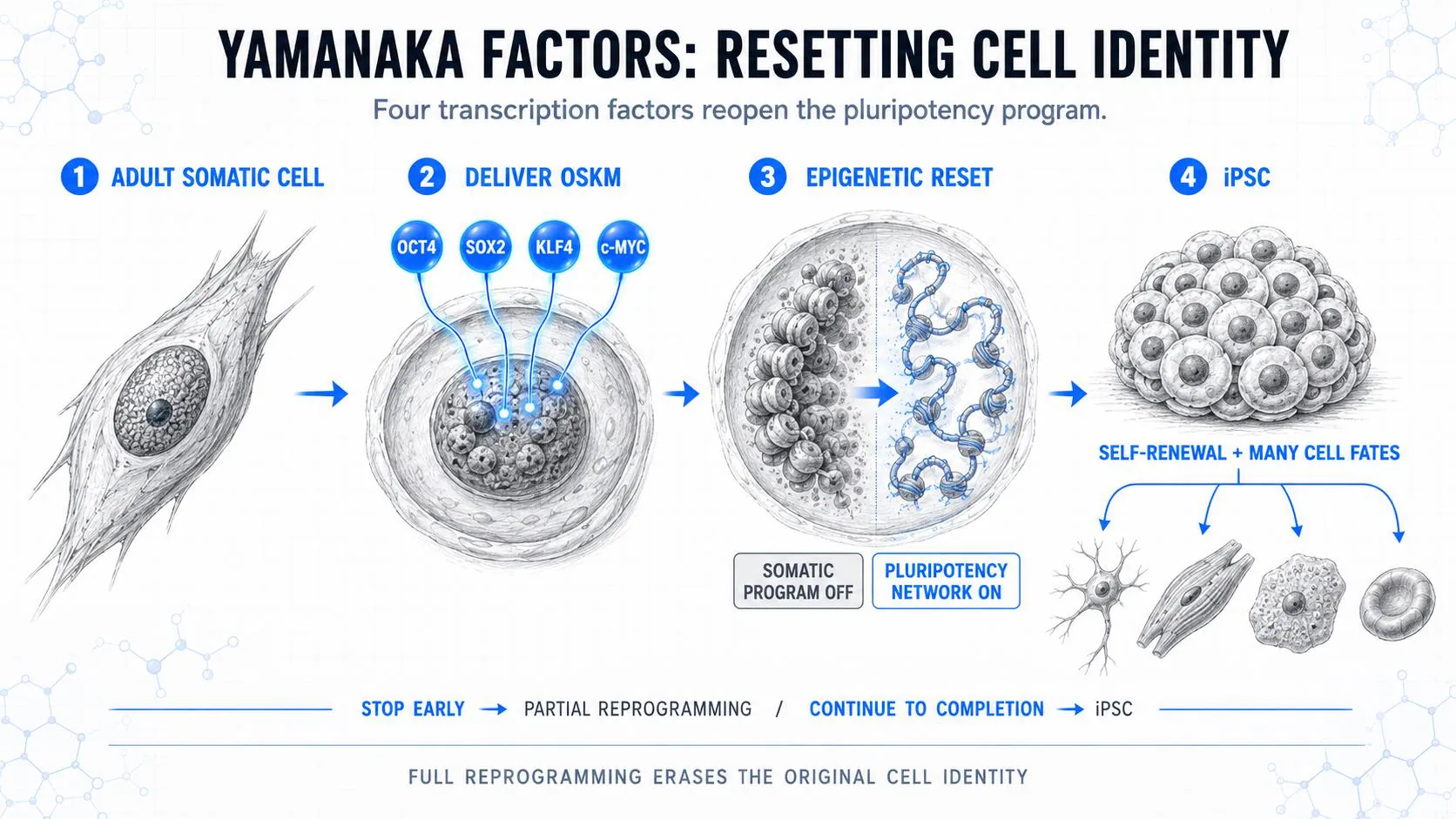
Yamanaka factors reset cell identity.
Four transcription factors reopen the pluripotency program. Deliver them and an adult cell walks back toward a stem-cell state. The trick is deciding how far to let it go.
- 1 Adult somatic cell A differentiated cell with its identity set.
- 2 Deliver OSKM OCT4SOX2KLF4c-MYC
- 3 Epigenetic reset Somatic program off. Pluripotency network on.
- 4 iPSC Self-renewal + many cell fates
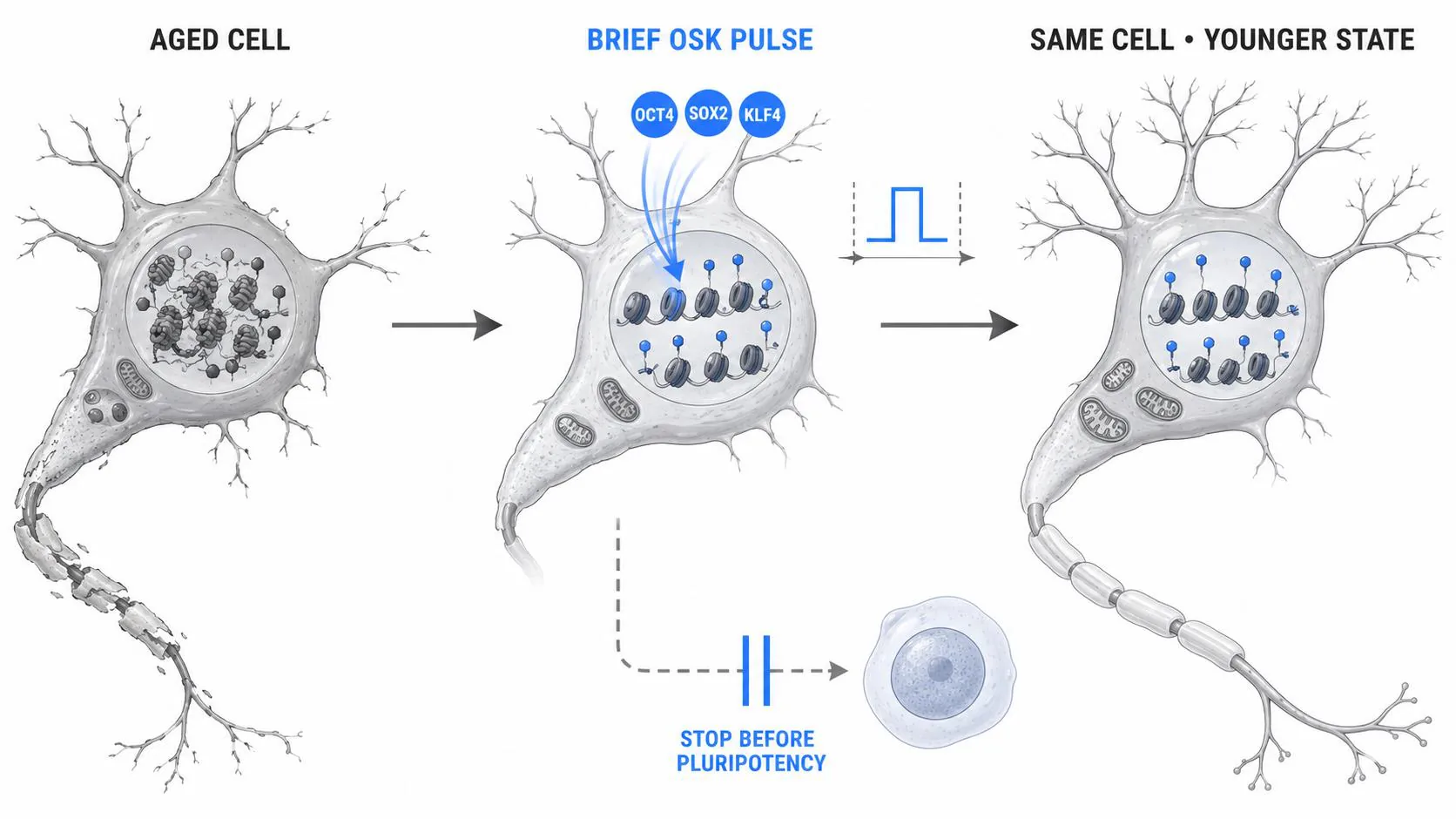
Partial vs. full reprogramming
How long do you leave the factors on?
A brief OSK pulse moves an aged cell to a younger state and keeps it the same cell. Continue to completion and you get an iPSC, which can become many cell types but has forgotten what it was.
Partial reprogrammingSame cell. Younger state.Brief OSK pulse, stopped before pluripotency.
iPSCSelf-renewal and many cell fates.Full reprogramming erases the original cell identity.
06 Lever two · Regenerate
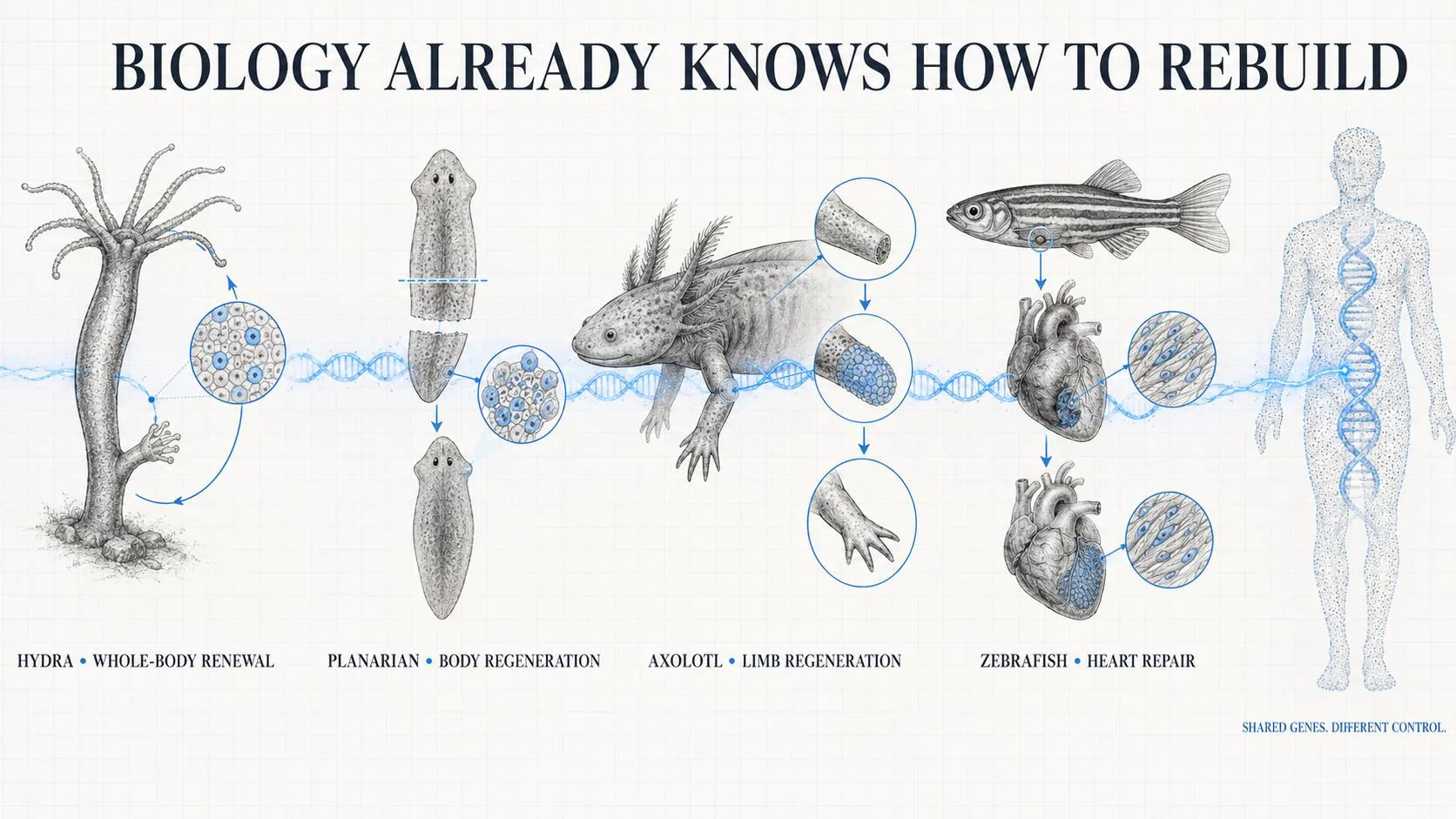
Biology already knows how to rebuild.
Shared genes. Different control. Many species regenerate complex tissues on their own, and humans still run parts of that program.
- HydraWhole-body renewal
- PlanarianBody regeneration
- AxolotlLimb regeneration
- ZebrafishHeart repair
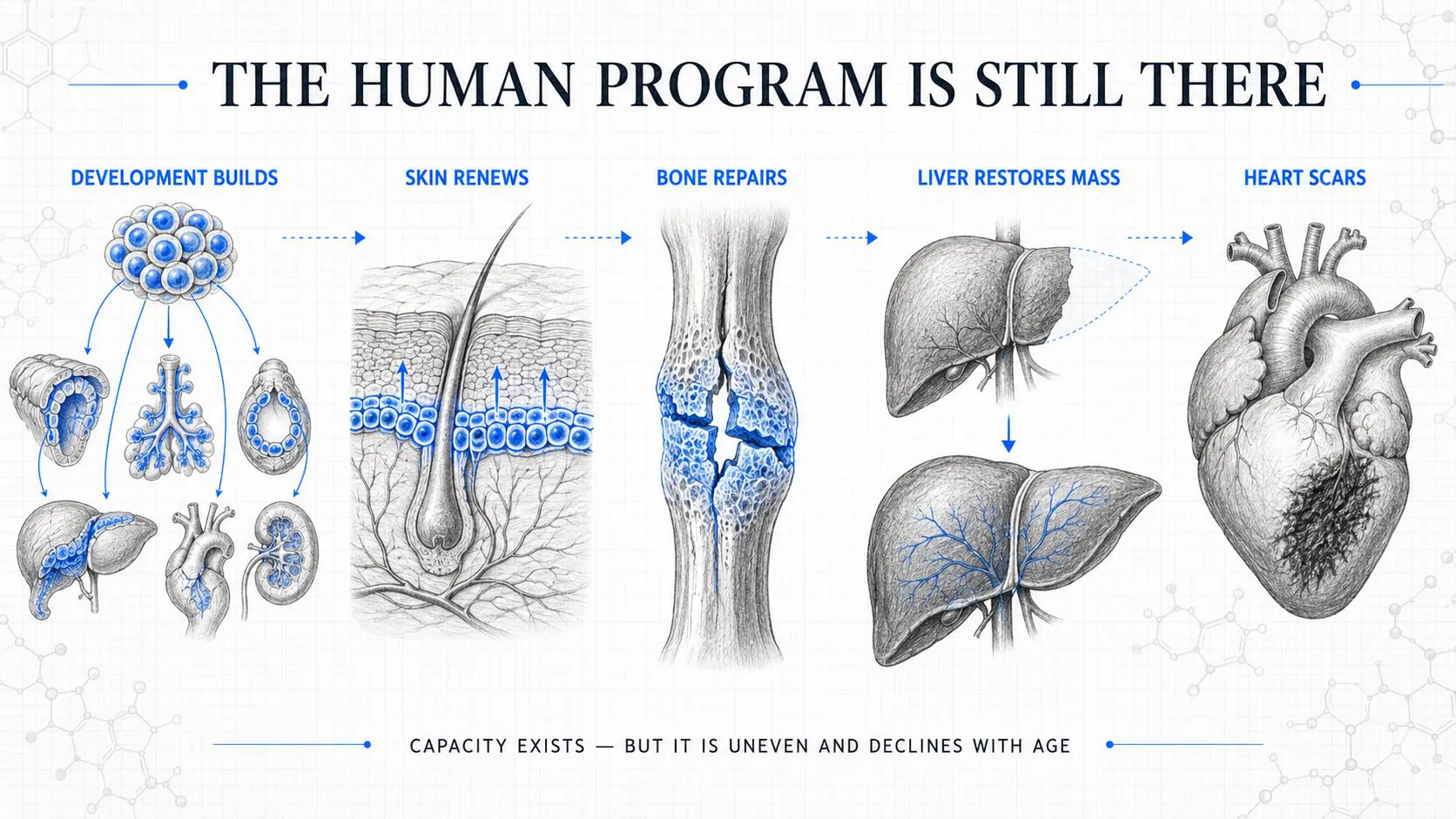
The human program is still there
Capacity exists. It is uneven, and it declines with age.
- Development builds
- Skin renews
- Bone repairs
- Liver restores mass
- Heart scars
Development builds every organ from scratch. Skin and bone still repair. The liver restores its mass. The heart scars. Same body, five different answers to the same question.
The same injury can end two ways
Tissue damage, then a decision.
Fibrosis
- Inflammation
- Collagen
- Lost function
The default human answer in most adult tissues. The wound closes, the tissue does not come back.
Regeneration
- Resolution
- Patterning
- Restored function
The axolotl’s answer. Also the answer in a human liver, and in a child’s fingertip.
The therapeutic target is the decision process.
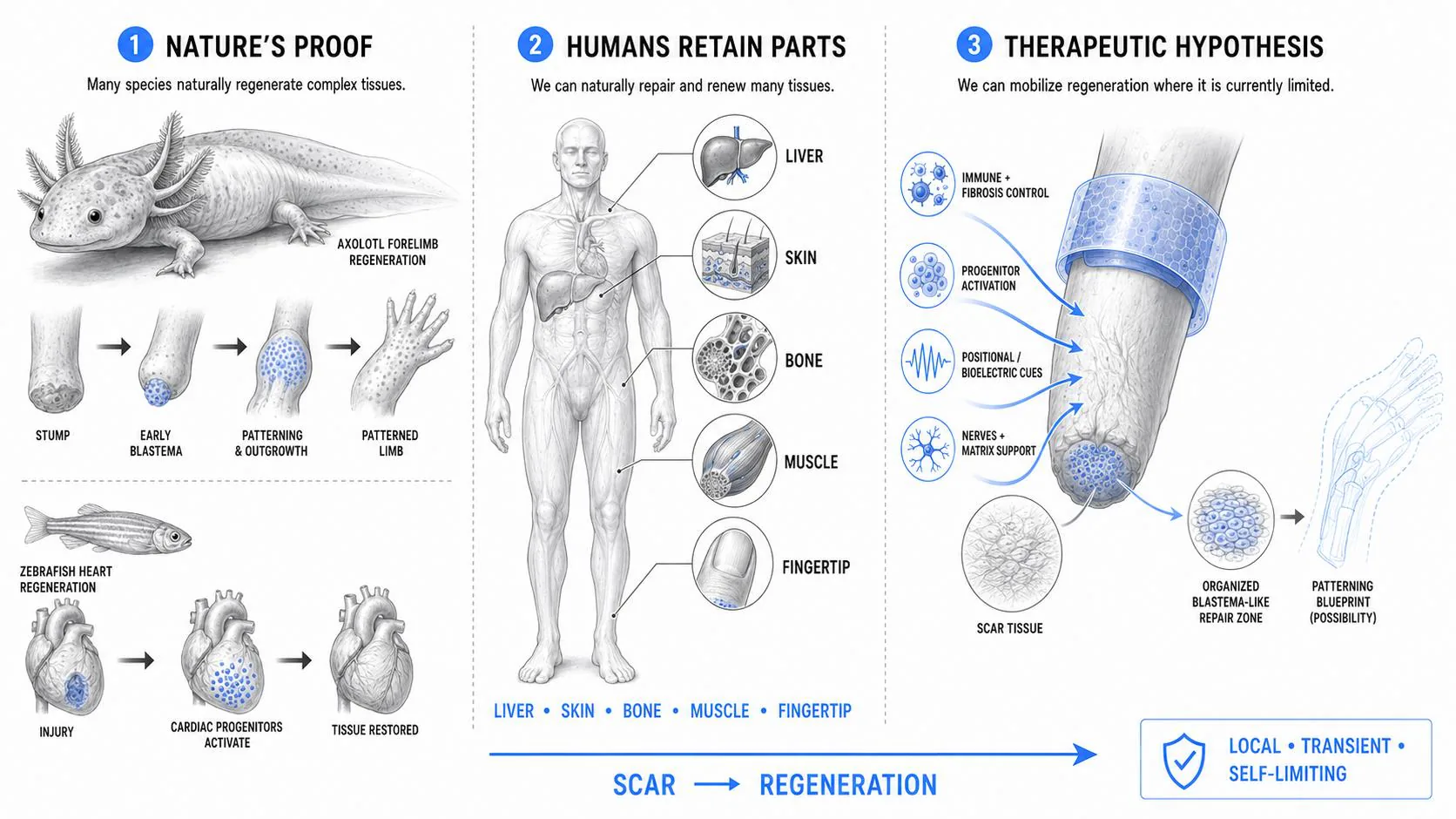
1 Nature’s proof
Many species naturally regenerate complex tissues.
Axolotl forelimb: stump → early blastema → patterning and outgrowth → patterned limb. Zebrafish heart: injury → cardiac progenitors activate → tissue restored.
2 Humans retain parts
We can naturally repair and renew many tissues.
- Liver
- Skin
- Bone
- Muscle
- Fingertip
3 Therapeutic hypothesis
We can mobilize regeneration where it is currently limited.
- Immune + fibrosis control
- Progenitor activation
- Positional / bioelectric cues
- Nerves + matrix support
Scar→Regeneration
Local · Transient · Self-limiting
07 Lever three · Replace
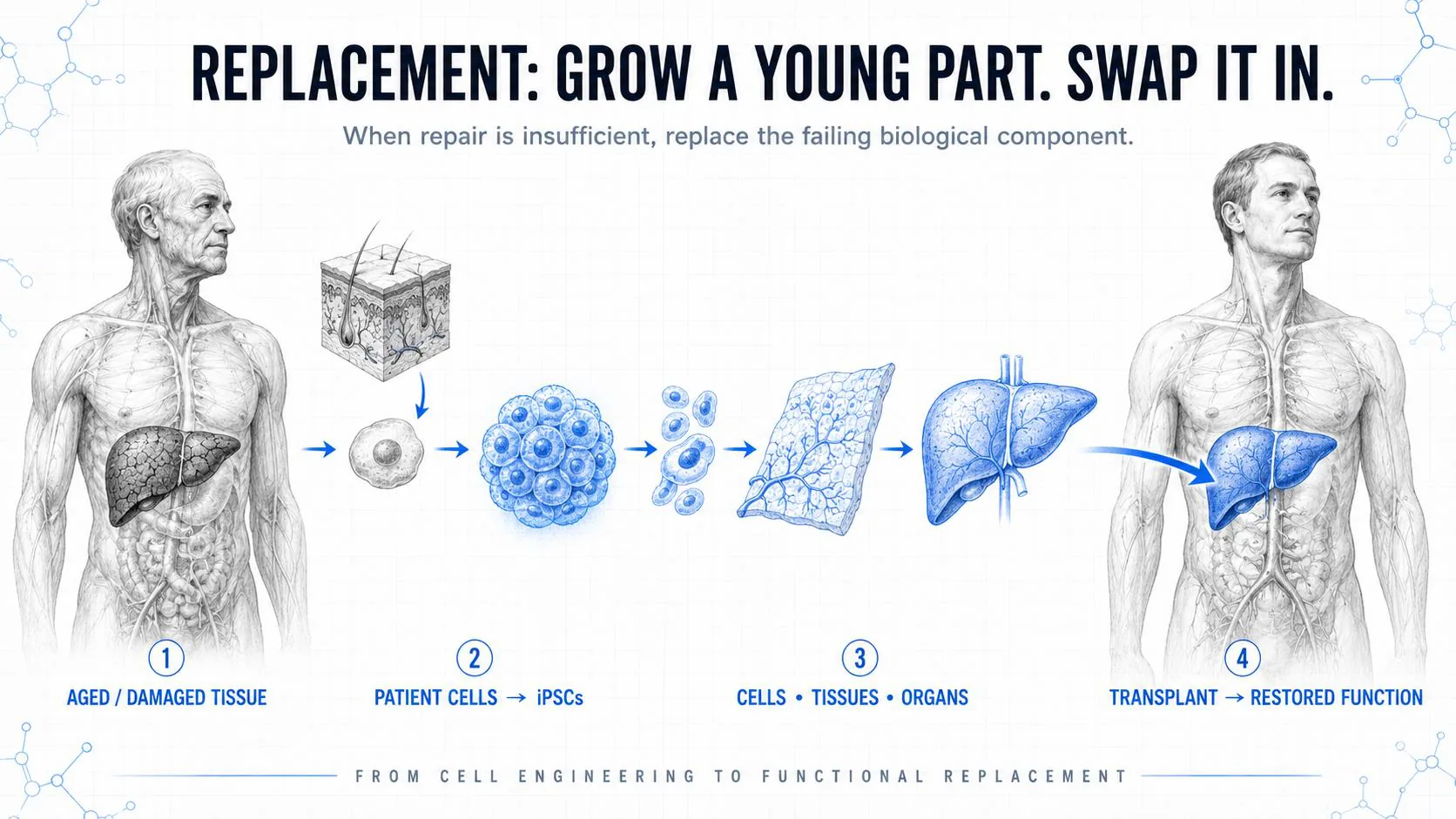
Grow a young part. Swap it in.
When repair is insufficient, replace the failing biological component. From cell engineering to functional replacement.
- 1Aged / damaged tissue
- 2Patient cells → iPSCs
- 3Cells · tissues · organs
- 4Transplant → restored function
Replacement · Xenotransplantation
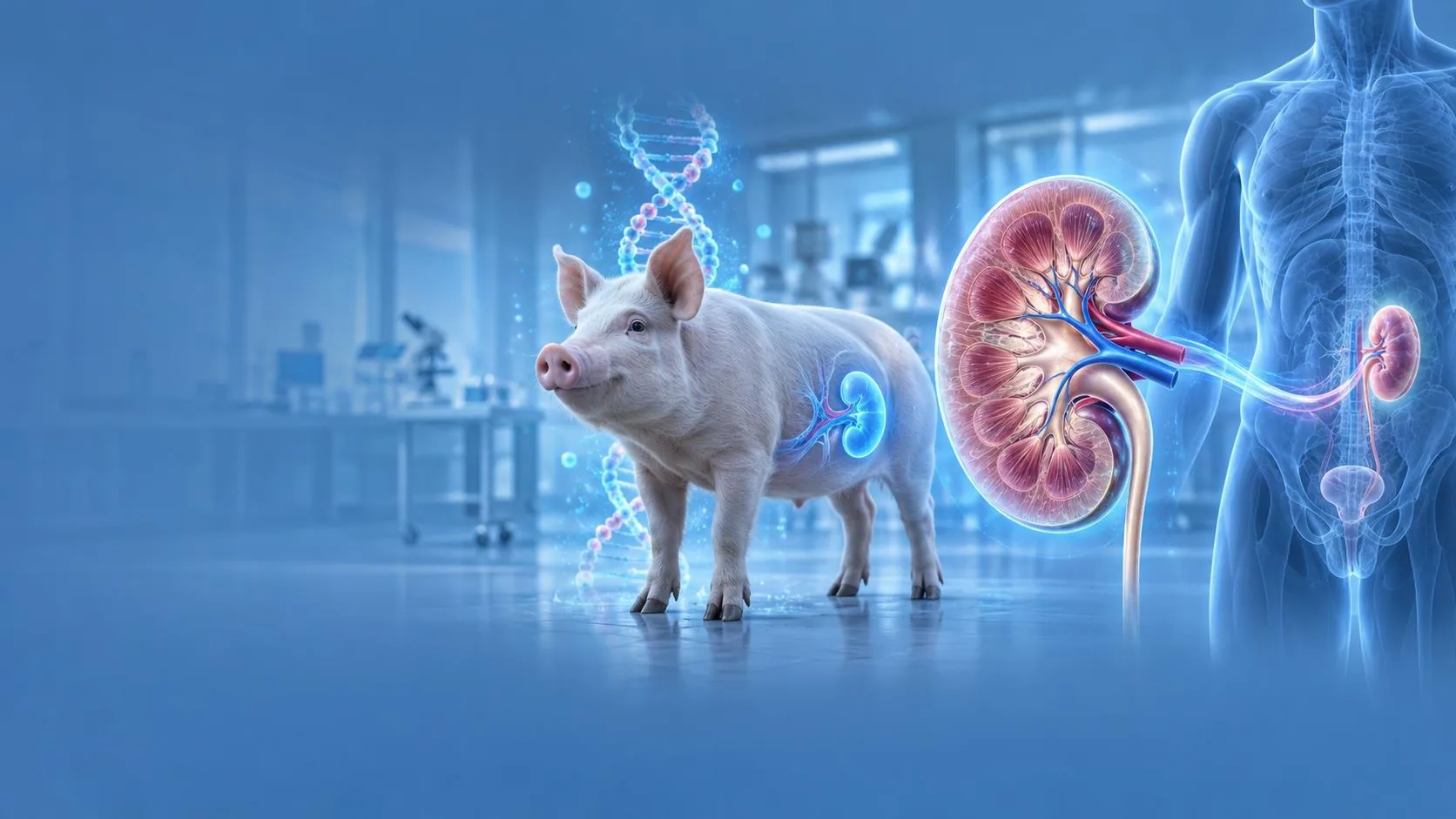
Pig organs engineered for human recipients.
69 edits in the eGenesis kidney platform. Three kinds of change, one goal: an organ the human immune system will tolerate.
- 0 Pig antigen genes disabled Reduce antibody recognition.
- 0 Human genes added Improve immune and blood compatibility.
- 0 Viral copies inactivated Reduce risk from endogenous pig retroviruses.
Human kidney transplants have begun.
Immunosuppression and long-term safety monitoring remain necessary.
Replacement · Stanford / Nakauchi lab
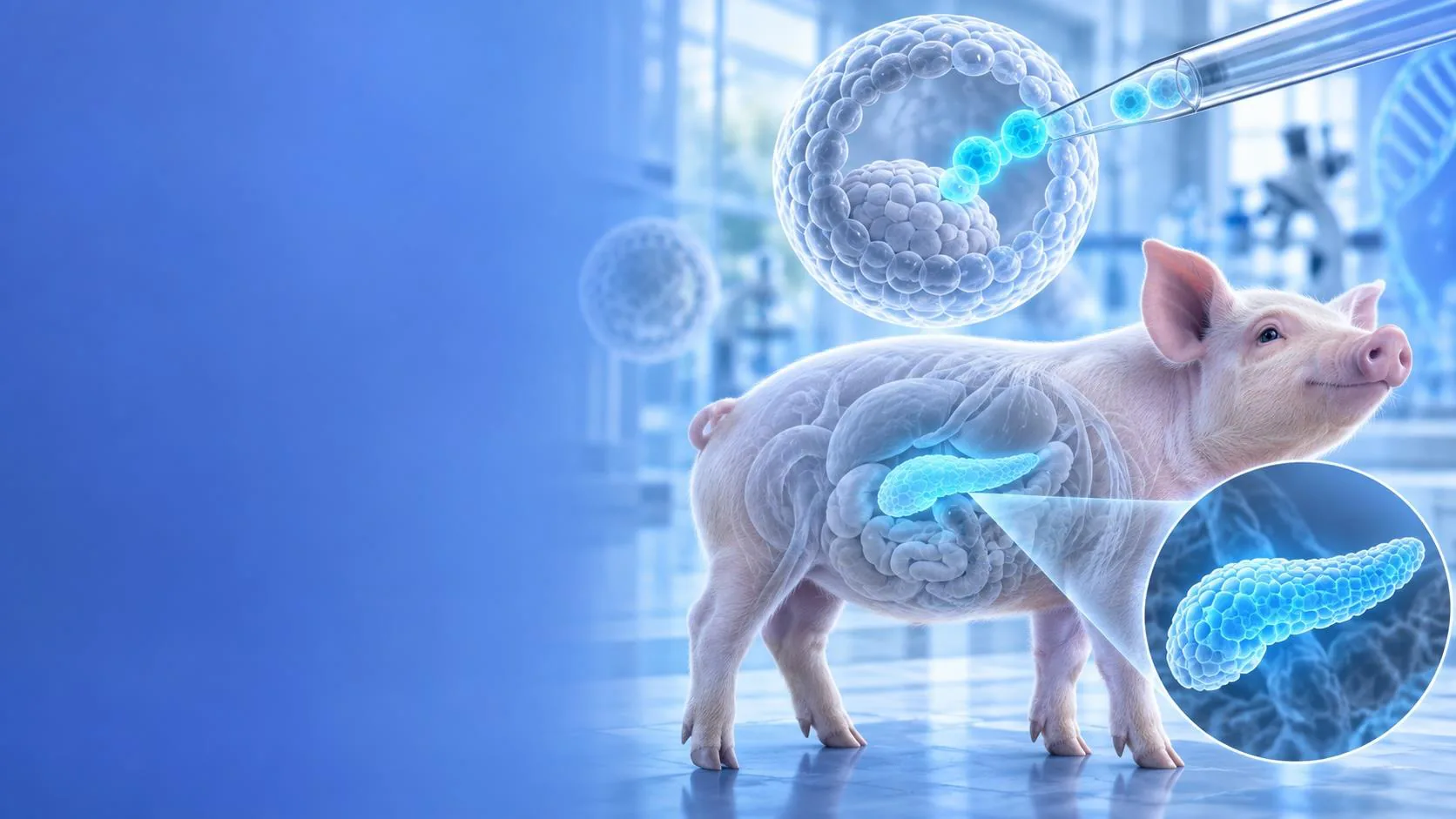
Human tissue grown inside an animal host.
Blastocyst complementation, in three moves.
- 1Create an empty organ nicheDisable the host’s ability to make a specific organ or cell type.
- 2Add human stem cellsDonor cells could fill the vacancy as the host develops.
- 3Recover replacement tissueGoal: patient-matched tissue grown within an animal.
Proof in rodents. Human organs remain a goal.
2026 advance: protecting donor cells from early immune clearance.
Replacement · Renewal Bio
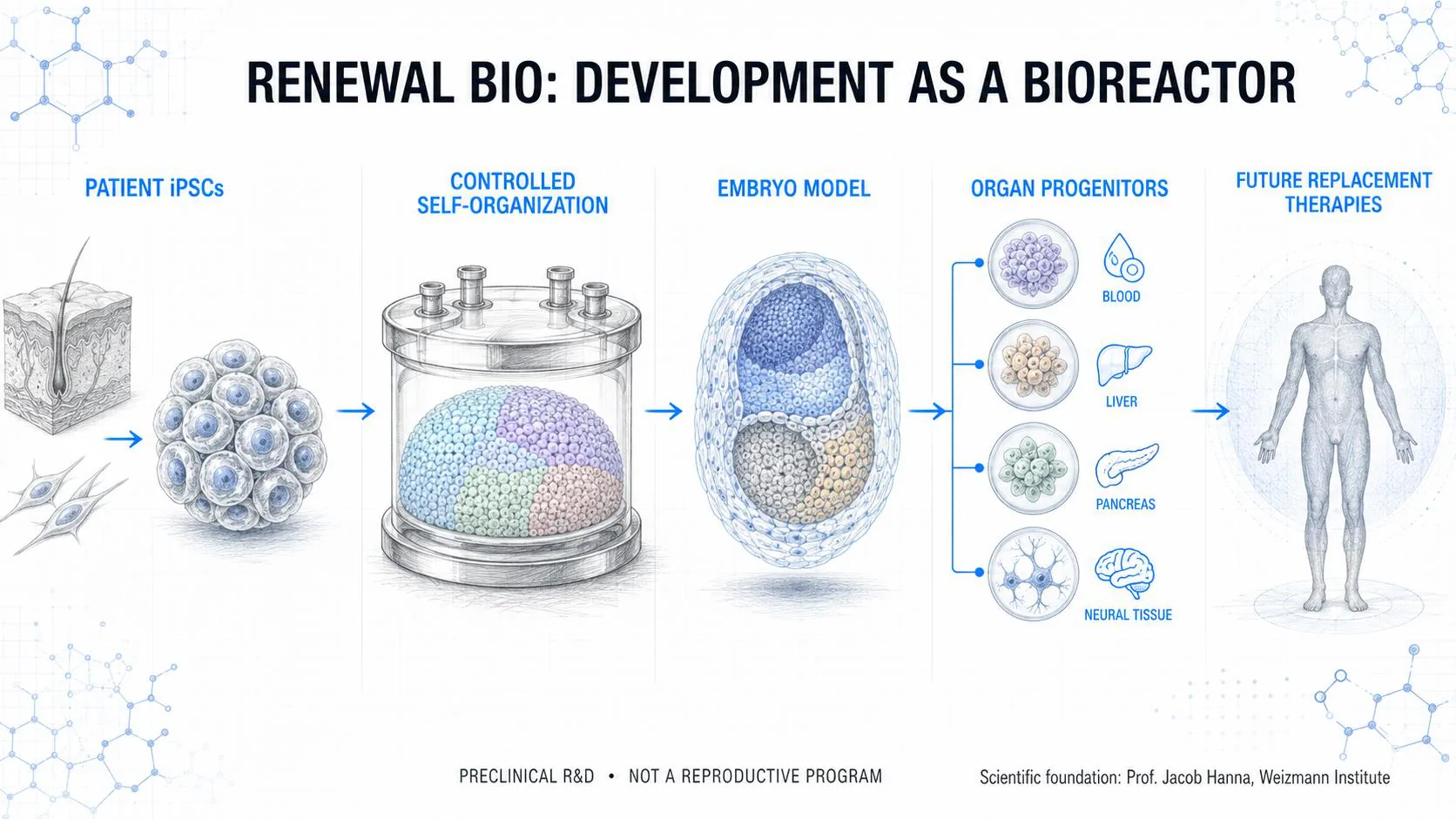
Development as a bioreactor.
Instead of coaxing one cell type at a time, let an embryo model do what development already does: organize patient cells into the progenitors of blood, liver, pancreas and neural tissue. Preclinical R&D. Not a reproductive program. Scientific foundation: Prof. Jacob Hanna, Weizmann Institute.
- 01Patient iPSCs
- 02Controlled self-organization
- 03Embryo model
- 04Organ progenitorsBloodLiverPancreasNeural tissue
- 05Future replacement therapies
In the record
- CellCeci n’est pas un embryon de sourisVol. 185 No. 18 · September 1, 2022
- NatureEmbryo models: stem cells form structures that mimic two-week-old human embryos19 October 2023
- CNNA synthetic embryo, made without sperm or egg, could lead to infertility treatments
- NBC NewsScientists use stem cells to create synthetic mouse embryos
- CNN HealthScientists report creation of first human synthetic model embryosJune 15, 2023
- The New York TimesScientists Debut Lab Models of Human Embryos
- ABC Science‘Synthetic human embryos’ were created using stem cells. What are they, and why were they made?June 20, 2023
Covers and headlines as shown in the deck. The embryo-model work is from the Hanna lab; the stembroid data in the deck is marked confidential and is not reproduced here.
08 The repair thesis · Maintenance · Restoration
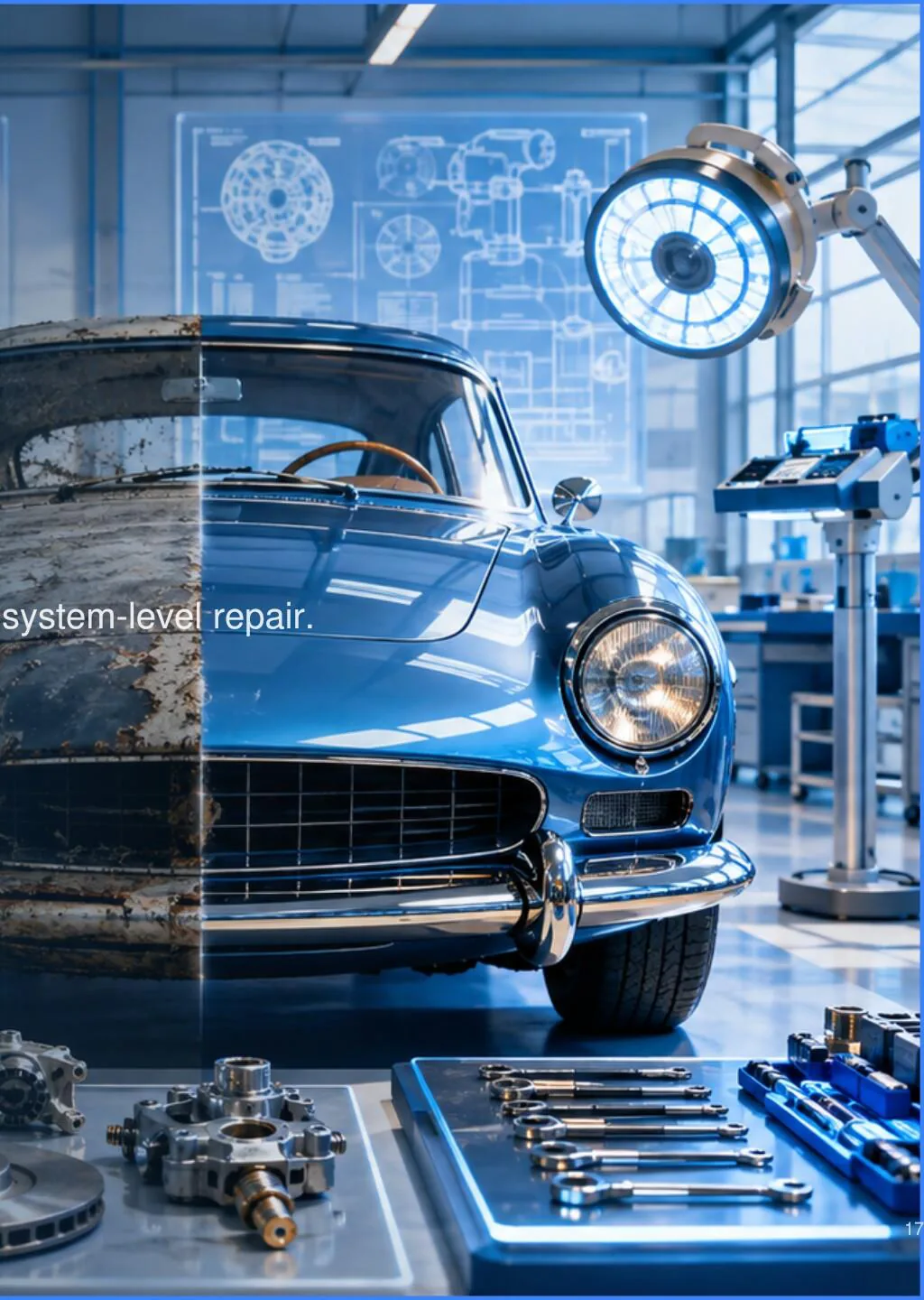
We restore complex machines. Biology needs a repair toolkit.
Aging accumulates damage across interacting systems. The answer is repeated, system-level repair.
Diagnose→Replace→Reprogram→Regenerate
Maintenance can turn decline into renewal.
09 Why now
The breakthrough is convergence.
Single-cell measurement, AI biology, gene delivery, cell engineering, developmental biology and immune control each matured on their own. Braided together they make the three levers usable.
10 Paths to 160
Who’s building it.
The NFX Bio companies from the deck, sorted by the plan they advance. Only one of them is a Plan A company today.
- Not a company. A wait.
- Not a company. The default.
Keep going
What else happens if this works.
Longer healthy lives change the national debt, health spending, and how long people earn. The byproducts page walks through the numbers in the deck.
Read the byproducts →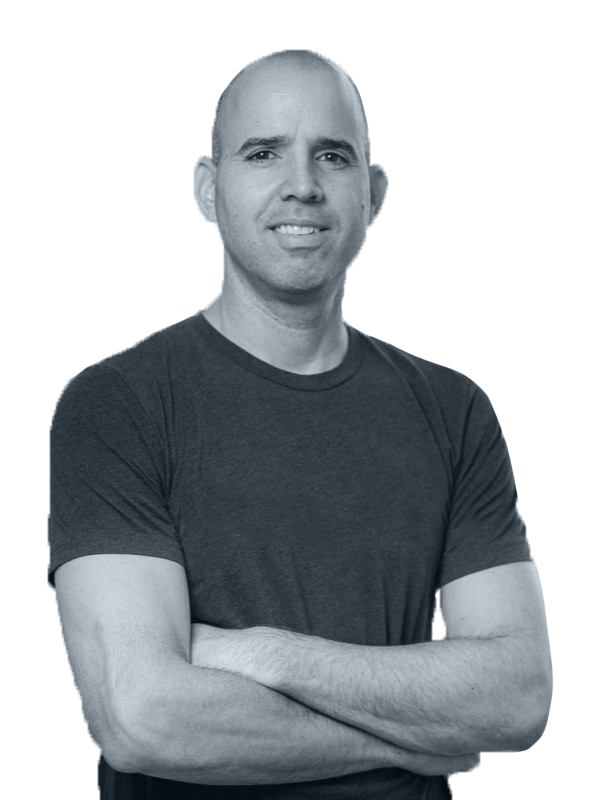
The talk
Omri Amirav-Drory, PhD
General Partner at NFX, where he leads NFX Bio. This site follows his talk slide by slide. Where we added a sentence of our own, it’s plain-language framing, not new science.
Omri on nfx.com ↗